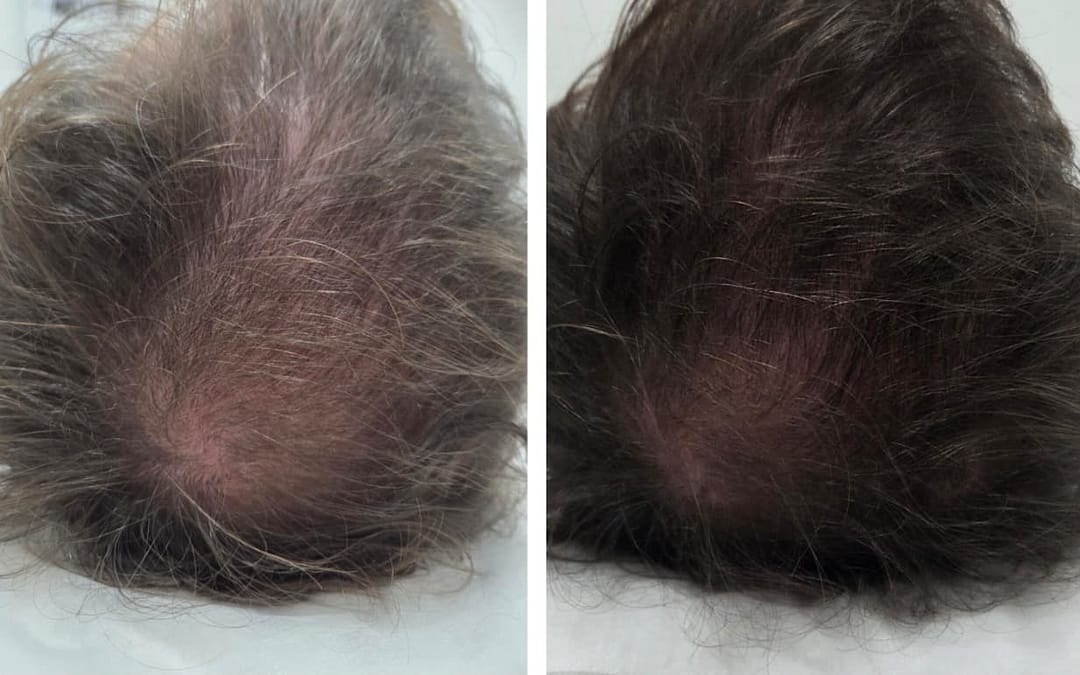
Hair loss can be an emotional and frustrating experience. Whether you’ve noticed increased shedding, thinning hair, or a widening part line, one thing is clear: the earlier you act, the more treatment options are available.
One of the most exciting developments in regenerative medicine and aesthetic treatments is the use of hair growth factors—a treatment designed to support the body’s natural ability to repair, regenerate, and stimulate healthier hair growth.
But what exactly are hair growth factors, and how do they work?
Understanding Hair Growth
To understand how hair growth factors work, it’s important to first understand the hair growth cycle.
Hair follicles cycle through three primary phases:
Anagen Phase (Growth Phase)
This is the active growth phase, where hair follicles produce new hair. This phase can last several years.
Catagen Phase (Transition Phase)
A short transition period where growth slows and the follicle prepares to rest.
Telogen Phase (Resting Phase)
The hair sheds and the follicle becomes inactive before restarting the cycle.
Many forms of hair loss occur when follicles spend less time in the growth phase and more time in the resting phase.
What Are Hair Growth Factors?
Hair growth factors are naturally occurring proteins and signaling molecules that play a crucial role in cell communication, tissue repair, and regeneration.
In hair restoration treatments, these growth factors help stimulate and support the hair follicle environment by encouraging:
✔ Improved blood supply
✔ Cellular repair
✔ Follicle stimulation
✔ Reduced inflammation
✔ Healthier scalp conditions
The goal is not simply to create new hair overnight but rather to optimize the conditions needed for healthier hair growth over time.
How Hair Growth Factors Work
Hair growth factors work by communicating with dormant or weakened hair follicles.
These signals help:
Stimulate Hair Follicles
Hair follicles receive signals that encourage them to re-enter the active growth phase.
Improve Blood Circulation
Improved circulation delivers oxygen and nutrients to the follicles.
Support Cellular Regeneration
Growth factors help repair damaged tissue and support healthier follicle function.
Reduce Inflammation
Chronic scalp inflammation may contribute to certain forms of hair loss.
Encourage Healthier Hair Production
Over time, hair may become thicker, healthier, and denser.
Who May Benefit from Hair Growth Factors?
Hair growth factors may be beneficial for patients experiencing:
Early Hair Thinning
The sooner treatment begins, the greater the potential for preserving existing follicles.
Female Pattern Hair Loss
Women experiencing widening part lines or diffuse thinning may benefit.
Male Pattern Hair Loss
Hair growth factors may support hair density and slow progression.
Postpartum Hair Loss
Some patients experience increased shedding after pregnancy.
Stress-Related Hair Loss
Hair loss triggered by physical or emotional stress may respond to regenerative treatments.
Aging Hair
As we age, hair naturally becomes thinner and less dense.
Signs You Should Seek Treatment Early
Many patients wait too long before seeking help.
You should consider an assessment if you notice:
- Increased shedding
- A widening part line
- Thinner ponytail volume
- Receding hairline
- Visible scalp
- Decreased hair density
- Slower hair growth
Early intervention often provides the best opportunity for preserving and restoring hair.
Why Home Care Matters
One of the biggest misconceptions about hair restoration treatment is that clinic treatments alone are enough.
Successful hair restoration often requires a combination approach, including:
✔ Professional treatments
✔ Medical assessment
✔ Appropriate supplementation
✔ Consistent at-home care
✔ Healthy scalp management
Supporting hair growth outside the treatment room is often just as important as the treatment itself.
How Long Do Hair Growth Factor Treatments Take to Work?
Hair restoration requires patience.
Most patients begin noticing improvements over several months because hair follicles need time to complete their natural growth cycles.
Typical progression may include:
First 4–8 Weeks
- Reduced shedding
- Improved scalp health
Around 3 Months
- Early regrowth
- Improved hair quality
Around 6 Months
- Increased density
- Fuller appearance
9–12 Months
- Continued improvement
- More mature hair growth
Consistency remains one of the most important factors for success.
Hair Growth Factors vs Other Hair Restoration Treatments
Hair growth factors are often combined with other therapies for optimal results.
Treatment plans may include:
PRP Therapy
Uses platelets from your own blood to support regeneration.
Exosome Therapy
Supports cellular communication and tissue repair.
Medical Hair Loss Treatments
Certain medications may help support hair preservation.
Nutritional Support
Deficiencies can contribute to hair loss.
Scalp Care Protocols
A healthy scalp environment supports healthier follicles.
Is Hair Growth Factor Treatment Safe?
Hair growth factor therapies are generally considered safe when performed by trained medical professionals.
As with any medical treatment, an individual consultation and assessment are essential to determine whether the treatment is appropriate for your specific type of hair loss.
Why Early Intervention Matters
One of the most important principles in hair restoration is this:
It’s easier to preserve hair than to regrow hair that has been lost for many years.
The sooner we identify the underlying cause and begin treatment, the more options we typically have available.
Hair restoration isn’t about quick fixes.
It’s about:
- Supporting healthy follicles
- Improving scalp health
- Stimulating regeneration
- Creating long-term, sustainable results
Final Thoughts
Hair growth factors represent one of the most exciting developments in regenerative hair restoration.
By supporting your body’s natural repair processes, these treatments may help improve hair density, follicle health, and overall hair quality over time.
The key to successful hair restoration isn’t finding a miracle treatment.
It’s finding the right treatment plan, starting early, and remaining consistent.
Because healthy hair is a journey—not an overnight transformation.